
J Callander – Shadows in the Shade (13th Floor Album Review)
J Callander’s Shadows in the Shade is a carefully shaped debut, built over several years and grounded in atmosphere and intent. Spanning nine tracks, each running beyond five minutes, ideas have space to develop through extended structures and shifting arrangements.
Musically it sits within atmospheric alternative rock, drawing on layered guitars, steady rhythmic foundations and piano used sparingly to create songs that move gradually rather than resolve quickly.
At its core, the album wrestles with a set of central concerns: personal responsibility, social dislocation and the tension between outward roles and inner truth. Lines such as “we are the little people” and “our blood built the roads you walk on” frame a collective voice shaped by labour and invisibility, while elsewhere Callander internalises that conflict with “I’m not the enemy without, I’m the enemy within”, locating it at a more personal level. These are direct, word-rich lyrics, delivered with a measured baritone that sits between spoken and sung, allowing the vocal to stretch and settle, giving it a grounded, deliberate presence.
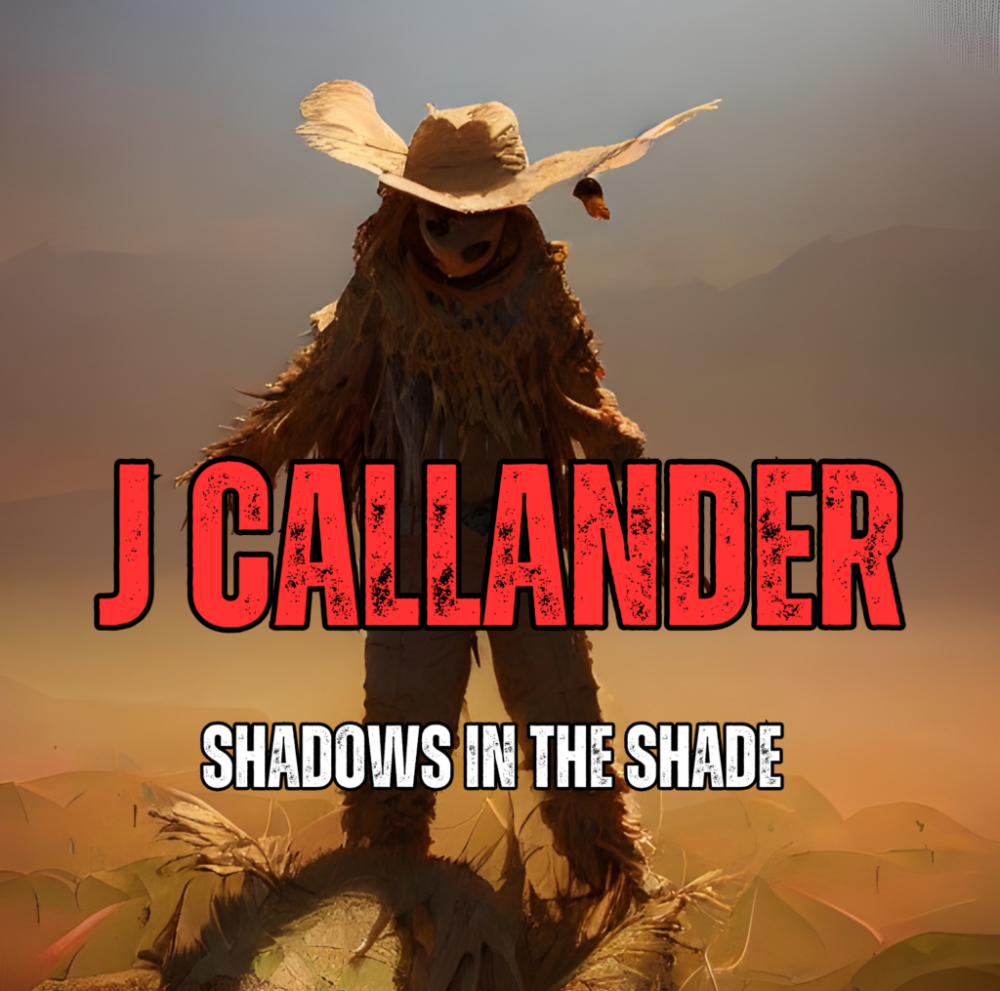
The album’s title, Shadows in the Shade, captures this layering of unease. It suggests something concealed beneath an already obscured surface, an idea that runs through both the writing and the arrangements. Even in quieter passages there is often a sense of tension held back rather than released. The cover image reinforces this mood, its solitary, scarecrow-like figure set against a barren landscape, echoing themes of isolation and endurance.
From the outset, The Little People establishes both the thematic and musical approach. The song moves between a restrained groove and bursts of intensity, with guitars and drums rising quickly around the vocal before dropping back to allow key lines to land. This pattern of expansion and contraction becomes a defining feature across the record. Songs unfold in waves, building through layered guitars and steady rhythmic pulses, then pulling back into sparser spaces where the lyric takes focus. Multiple guitar lines often circle each other, creating motion within the arrangement rather than a single dominant lead, while the rhythm section holds a consistent centre.
The Real Surreal extends this approach into a longer, episodic structure. Opening in a sparse, heat-hazed atmosphere, it steadily accumulates weight through overlapping vocals and rising instrumentation, mirroring its themes of distortion and uncertainty. Bring the Pain and My Own Drum continue the exploration of agency and consequence, the latter finding a warmer, more grounded tone. Its central refrain, “marching to the beat of my own drum”, is given space to land, with shifts in texture allowing the song to move forward without losing clarity.
At the album’s centre, All I Can Bleed draws everything inward. Built on a slow, repeating guitar figure and a low, persistent drone, it centres on the line “I was supposed to be…”, repeated with increasing impact. The sparseness of the arrangement gives the vocal room to carry the emotion, with subtle shifts in tone and intensity building a growing sense of strain.
That alignment between lyrics and music becomes more forceful on The Enemy Within, where fast-moving rhythms and sharply defined guitar lines drive the track forward. The vocal keeps pace with the urgency of the arrangement, delivering a stream of identities and contradictions, each surge of musical intensity holding the themes tighter.
In the closing stretch, the album shifts again. Crossing the Rubicon balances abrasion and calm, its steady underlying rhythm anchoring a series of rising and falling passages. The Ballad of Frosty Jack then draws the music inward, its slow, deliberate guitar lines and quiet vocal holding tension through restraint. High, ringing notes and the careful start-stop motion of the guitar phrasing create a sense of unease that lingers rather than resolves.
Final track Homecoming begins sparsely, with an acoustic guitar strum leading to a questioning and subdued vocal. It later builds through echoing guitar, steady bass and short bursts of electric intensity. Rather than pushing toward a final peak, the track winds down, returning to its opening simplicity of strummed acoustic guitar and closing the album with a sense of release that feels earned.
Engineered by Matt Thompson and mixed by Aaron Glemboski, the production supports this emphasis on movement and control. Layers of guitar and reverb create depth, while shifts in texture are given space to register clearly. The album’s sense of purpose lies in how consistently it holds these elements together, pairing expansive, idea-driven writing with arrangements that carry that weight across its full hour-long span.
John Bradbury
Shadows In The Shade is out now. Click here to listen/buy.
