
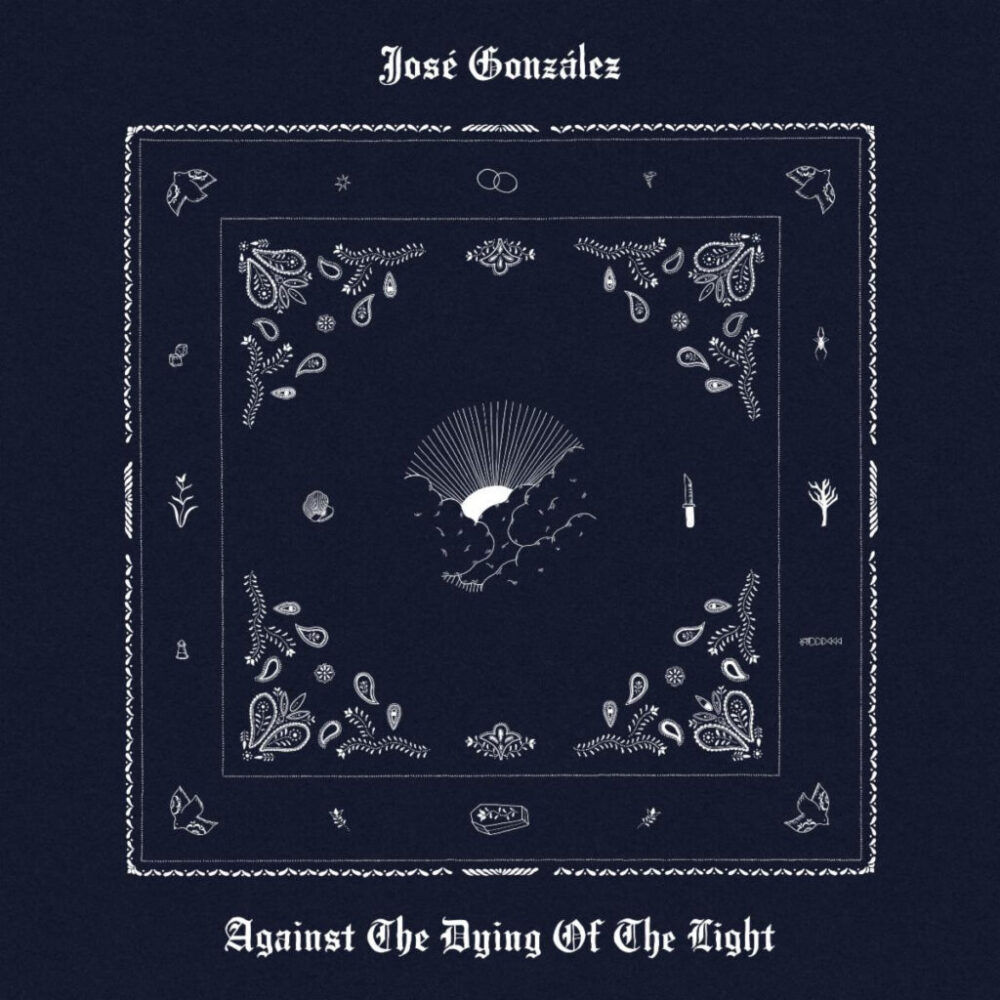
José González – Against The Dying Of The Light (City Slang) (13th Floor Album Review)
José González’s Against The Dying Of The Light arrives after another measured gap, shaped between touring, soundtrack work, and his band Junip, and carries the sense of something considered rather than accumulated.
Since Veneer (2003) established his sparse, fingerpicked sound, through In Our Nature (2007), Vestiges & Claws (2015) and Local Valley (2021), his work has been defined by a consistent refinement of a singular approach. This album continues that path, with a more explicit and at times forceful delivery.
The palette is tightly held. Fingerpicked nylon-string guitar, a steady but sparing bass presence, and a voice that rarely pushes beyond its natural register. González often works with alternate tunings and percussive right-hand patterns, creating circling figures that repeat and subtly reconfigure, with higher notes picked out above the rhythm. Here, those elements are used with precision. The songs move through shifts in emphasis, timing and phrasing, creating momentum from within the pattern itself.

A Perfect Storm sets that in motion. A faster-moving pulse, bass anchoring the rhythm, and a circling guitar figure that lifts into higher notes. The vocal enters almost spoken, slowing the momentum before the bass drops out and returns. Lines are delivered in contrasting ways, some stretched and suspended, others pushed through quickly, as if trying to keep pace with the thinking behind them. “Intentions don’t matter much” is delivered in a rush, the bass landing more firmly beneath it. The guitar maintains its course while the voice presses against it, creating a quiet tension that carries forward.
That interplay between voice and pattern remains central. On Etyd, the picking is slower, the phrasing gliding clearly over the guitar. The song feels as if it is drawing to a close, then continues for a few final lines, extending its thought. The title track settles into a grounded, deliberate pulse that leans into the rhythm. “Accept who you have become” arrives calmly, the delivery measured, even as the lyrics argue for disconnection from the systems shaping us. The closing line, “celebrate the fucking fact that we’re alive,” lands with a directness that stands out against the restraint around it.
Losing Game moves through a questioning refrain, its back-and-forth rhythm and quickening guitar reflecting uncertainty and loss of control. The ideas are expressed with clarity, sometimes moving from observation to participation.
The album finds its balance in moments of space and lift. For Every Dusk draws the listener inward, its guitar patterns adjusting to the vocal, at times leaving the voice exposed. “It’s not worth whining for, sail on, move on,” he sings, the line carried by stillness rather than emphasis. The refrain, “For every dusk, there’s a dawn,” offers a simple sense of continuation.
At the centre of the album, González’s use of Spanish and Swedish adds texture and perspective, allowing some songs to feel observed rather than argued. Pajarito, sung in Spanish, brings a lift in tone and rhythm. Its brighter strums and lighter feel carry reflections on growth and patience: “Seguí andando por donde vas” (keep walking the path you’re on) and “Para ver lo lejos que hemos ido” (to see how far we’ve come), suggesting both distance travelled and an encouragement to keep moving.
Ay Querida and U / Rawls Slöja extend that approach. The latter, in Swedish, unfolds as a narrative of judgement and constraint, its steady strum and folk-like cadence offers a quiet renewal.
Across the album, repetition is used with care. Phrases return, sometimes deepening the sense of flow, sometimes sitting more plainly on the surface. The penultimate song You & We leans into this, its simple lines, “With all of my heart, I wish you well,” returning within a gentle, swaying pattern that suggests reassurance and connection. Before the album finishes with Joy (Can’t Help But Sing), where the reminder that we ”can’t help but sing” repeats as the music closes.
What stands out is how fully the album holds its internal logic. With González writing, performing and producing, the guitar and voice feel part of the same system, each subtly reshaping the other. The arrangements tighten and loosen, bass notes anchoring or emphasising rather than driving, and songs often extend or settle rather than resolve in a fixed way. It leaves the record suspended between reflection and instruction, calm and urgency.
Against The Dying Of The Light does not expand González’s sound so much as to press it into new territory. The shifts are slight, but the thinking behind them is not.
John Bradbury
Against The Dying Of The Light is out now via City Slang
PURCHASE/STREAM AGAINST THE DYING OF THE LIGHT
