
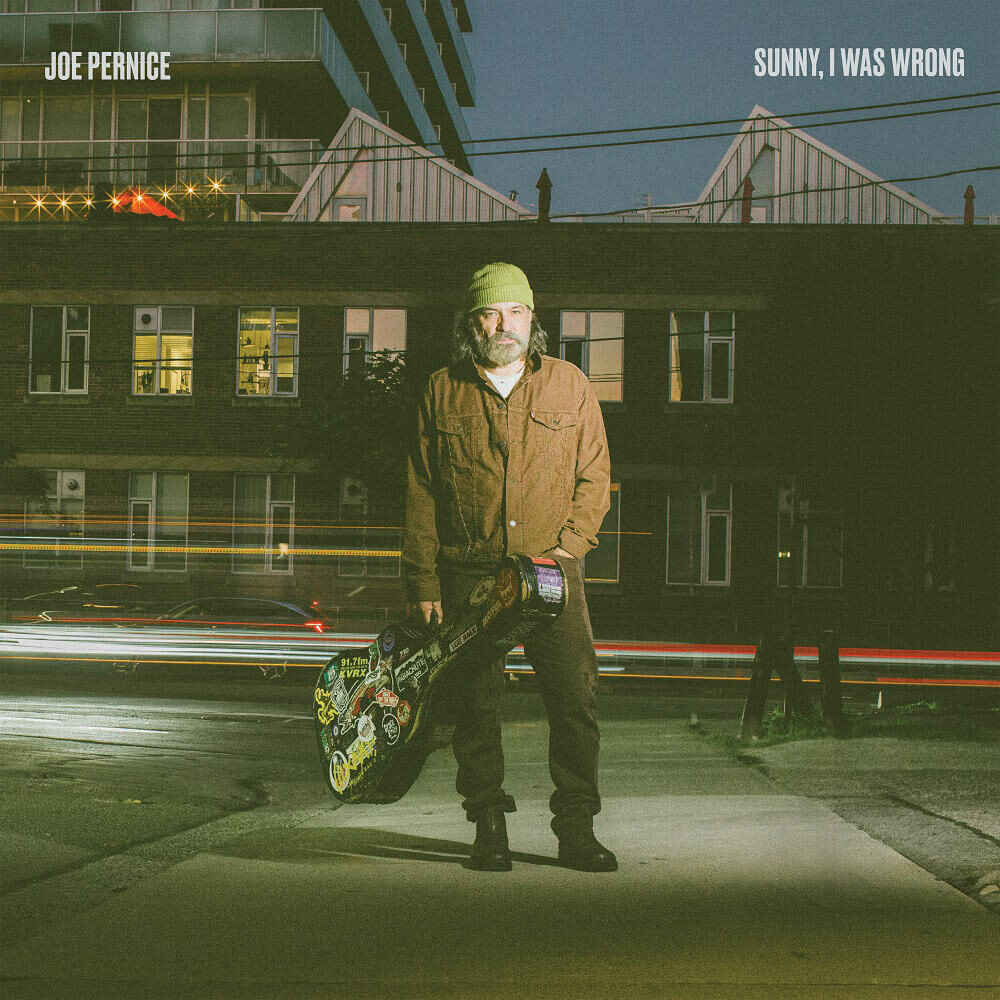
Joe Pernice – Sunny, I Was Wrong New West) (13th Floor Album Review)
Joe Pernice’s Sunny, I Was Wrong is an album where nothing pushes for a big moment. The songs gather meaning gradually, each small shift adding to something that only fully settles after they’ve finished.
Joe Pernice has been refining this approach for decades. From the early alt-country sparseness of Scud Mountain Boys through the melodic polish of the Pernice Brothers, his catalogue has consistently returned to the same foundations: careful songwriting, emotional restraint, and a preference for implication over statement. Across close to twenty records in various forms, he has moved steadily towards clarity and economy. Sunny, I Was Wrong is his first formal solo studio album, and it feels like a natural continuation of that trajectory, with the voice more exposed and the songs more directly owned.
Throughout, the core group of Jim Creeggan on bass, Mike Belitsky on drums and percussion, Mike Evin on piano and keys, and Michael

McKenzie on guitar keep everything grounded, giving the record a warm, Americana base shaped by classic pop songwriting, with occasional chamber-like touches in the arrangements. Burke Carroll’s pedal steel weaves through the songs, adding lift and colour without drawing attention to itself.
The supporting cast is strong and used with precision. Aimee Mann, Rodney Crowell, Norman Blake and Jimmy Webb all appear, but none of them pull the record away from its centre. Instead they deepen it. Mann’s vocal on Deep Into The Dawn blends rather than contrasts, reinforcing the reflective tone. Crowell’s presence on It Won’t Be Me adds weight to a song built on resolve. Blake’s harmonies on I’d Rather Look Away bring a softness that sits against the sharper edges of the lyric. Webb’s piano on the closing track opens the arrangement out without disturbing its balance.
The sequence gives the album a clear internal arc, each song extending related ideas from slightly different angles. The album opens with Peace In Our Home, a brief and direct statement. The vocal sits high and clear over a simple strum, almost lullaby-like, repeating the line “There’ll be peace in our home when you’re gone.” The words have an obvious contemporary reading given the current political climate in the United States, but the lyric is broad enough to hold its meaning without being tied to a single interpretation.
Deep Into The Dawn introduces the theme of looking back at life with a different perspective. “Couldn’t even recognize it then for what it was” becomes a refrain, the stop-start structure taking the song further into the memory each time it returns. The arrangement shifts almost imperceptibly, and the sense of time passing unnoticed is established early.
If You Go Back To California opens the album out slightly, guitars rising and falling between acoustic and fuller band textures, before Force Feed The Fire draws things back in. Here, strings and echoing guitars add depth, while the line “I lost five years and then I lost five more” lands as matter-of-fact.
The Black And The Blue introduces a more defined groove, the band locking in as the chorus “I’ve got a box full of bridges that we sold” provides one of the album’s clearest images. It is followed by It Won’t Be Me, where Crowell joins, the vocal interplay tempering what is a firm statement.
I’d Rather Look Away returns to restraint, its steady rhythm supporting a vocal that stays measured while guitars rise in short bursts around it. The title track, Sunny, I Was Wrong, follows, and its lighter musical touch allows the lyric to land with greater force, particularly in the line “I’m sorry if I thought you were the mirror of my life and not your own.”
Is It Serious unfolds as a drawn-out question, its phrasing circling without resolution. Twenty-Thousand Times holds to a steady groove, and its repeated central image stretches the emotion beyond the moment, turning a single feeling into something cumulative.
The closing track, It Got Away From Me, is the longest and most expansive. A distinctive guitar figure anchors the song while Webb’s piano adds space around it. Lines such as “I blew half my life on things I can’t explain” and “I don’t know if half of what I sing is true, but every line was sung to you” bring together the album’s themes of hindsight and what’s been missed.
Across these songs, Pernice builds a consistent world. Most run under three minutes. None rely on a dramatic shift. Instead they build through small, cumulative changes. That restraint is matched by close attention to detail: a chord change that shifts the tone of a line, a shift in vocal texture, or the unobtrusive entrance of pedal steel that lifts a phrase without announcing itself. The arrangements reflect the subject matter. These are songs about looking back, about recognising too late what was there, and they are constructed to unfold in the same way.
By the time the album closes, the gradual accumulation has done its work. The clarity of the writing, the control in the performances, and the precision of the lines give the record its shape and coherence. This is a literate, carefully constructed album, where simple phrases carry more than they first appear to, and where the absence of a big moment becomes the point.
John Bradbury
Sunny, I Was Wrong is out now on New West Records
