
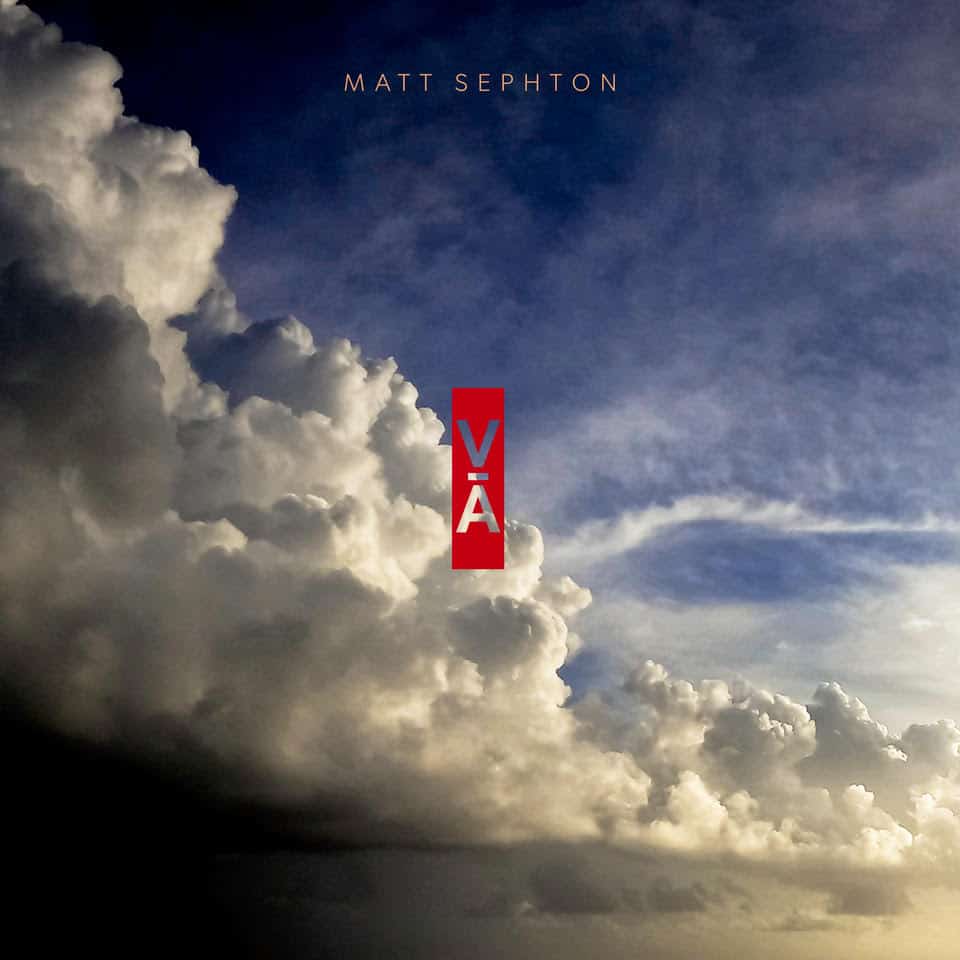
Matt Sephton – Vā (13th Floor Album Review)
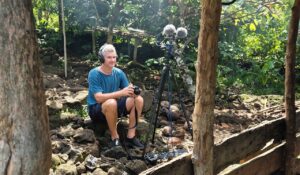
Some music is made to entertain; other music engages deeply and takes the listener places. Vā is definitely in the latter camp. This album by the Coromandel based producer and sound explorer Matt Sephton has its origins in his 2025 residency at the Tiapapata Art Centre in Samoa.
This, it seems, is a change for Septon. No longer recording under his bass-music persona of Matt Rapid, Vā bears his own name. This, combined with the Samoan language title, points to a place-based and personal emphasis to this release.
Opening track Floating makes its way into the world with crackling and pulsing electronic sounds backed by watery drips and trickles. An immediate evocation of place and sense of being taken somewhere.
In Samoan, Vā means the space between, somewhere liminal, relational, and sacred. A space that joins people with both their forebears and the ecology of the here and now.
Second track Siva, named for the traditional Samoan dance, opens with a tapping of Pātē, the traditional hand-held slit hardwood log drum. Behind the trance-like beat are distant voices and, perhaps, the roar of waves on a reef. We are transported.
The Sky opens with a continuation of this beat, but abruptly electronic sounds enter along with a voice. Words are partially discernible. A speedier beat. Nightclub meets tropic dance. A hybrid space.
Turtle has haunting high-pitched sounds suggesting submarine messages. Mysterious voiceovers. Incantations that sound tantalisingly close but ultimately out of reach in the Vā. That space between.
Waves herald the beginning of Tiavea, named for a village on Upolu. Electro-synth sound arrows shoot through and past the distant sounds of Fa’asala (singing and chanting).
The album’s centrepiece and earlier single is Horizon. It’s a haunting piece mixing voices, synthesised soundscape and log drums unfurled into a melodic journey into the horizon, that literal meeting of worlds. The alluring sound of the fagufagu (Samoan nose flute) played by Tau’ili’ili Alpha Maiava.
Lava explores mystery of what was once molten fluidity but now is the solidity on which we can stand.
At over seven minutes, Paper is the longest track, unfolding with an occasional urgency. A voice-over offers a monologue in tune with the soundscape but just beyond discernible meaning,
Clay suggests a heavy digging process, a burial almost while Moana lifts the mood into a rhythmic embrace of the sea with an airy spaciousness. Water sounds and rattle of hollow drums. A here and now with hints of those who paddled this expanse in generations past.
Last track Umu has natural captured sounds of birdsong and children’s chatter alongside deliberately struck keyboard tones. Drums with their hollowness to the fore are tapped in duet with keyboard in one of the most endearing tracks. It took me again into the colours and smells of Samoa.
Yet in being taken there, no literal place is encountered but rather a space of possibility and potential, as much spectral as see-able.
In sum, this is a stunning evocation which suggests only a few precedents: Paddy Free’s electro-wizardry in Moana and the Tribe perhaps (synth meets earthy chant); the hypnotic and yet meditative minimalism of Phillip Glass; the grounding of the Drummers of Burundi in Joni Mitchell’s The Jungle Line. Ultimately, however, these electronic rhythms meet Polynesian atmospherics in a totally original way.
This is a deeply tonal work, rich in layers of immersive sounds augmented by natural recordings sourced within Samoa itself. There are few fellow explorers of sonic landscapes in this land: Rian Sheehan and Pitch Black come to mind. But Sephton’s album stands apart for its specificity of place, engagement with local people and intensely personal performance.
Superb.
Robin Kearns
Vā is released Friday, March 27th. Click here to listen/buy.
