
The Bride Dir: Maggie Gyllenhaal (13th Floor Film Review)
Written and directed by Maggie Gyllenhaal. Starring Jessie Buckley and Christian Bale alongside Peter Sarsgaard, Annette Bening, Jake Gyllenhaal, and Penélope Cruz.
It’s 1930s Chicago — jazz, speakeasies, gangsters, and molls — and a ruthless mobster is killing women. Mary Shelley (Jesse Buckley) is turning in her grave. She has unfinished business with her Frankenstein: a new tale interrupted by her death yet still tickling her brain in the afterlife like a phantom itch. What is a frustrated author to do but partially possess a young woman in a gangster bar and prompt her sudden penchant for whistleblowing on the femicidal activities of notorious crime boss Lupino (Zlatko Burić)?
Unsurprisingly, this is a career-limiting move in 1930s Chicago, and it is not long before Ida (also Jesse Buckley) and her unfettered outbursts meet an “unfortunate accident” involving two clumsy mobsters and a flight of stairs.
Meanwhile, Mary’s original creation (Christian Bale) is craving romance and companionship. Sadly, for Frank, being possessed of a face that only a mad scientist could love, he has been forced to take his dating aspirations to Chicago, asking Dr Euphronius (Annette Bening) to reanimate a companion for him.
Frank seeks more than mere physical gratification; with a heart that won’t beat, he is a hopeless romantic, addicted to classic musicals starring Jake Gyllenhaal’s Ronnie Reed, a song-and-dance man in the style of Gene Kelly or Fred Astaire.
Moved by Frank’s genuine desire for connection, Dr E agrees to flick through her graveyard Filofax and dig up a date for him. By a remarkable coincidence, the freshest potential corpse-bride candidate is Ida, who Frank initially rejects as “too beautiful.” But grave-robbers cannot be choosers, and Ida is revived, albeit with no memory of who she was prior to her untimely demise.
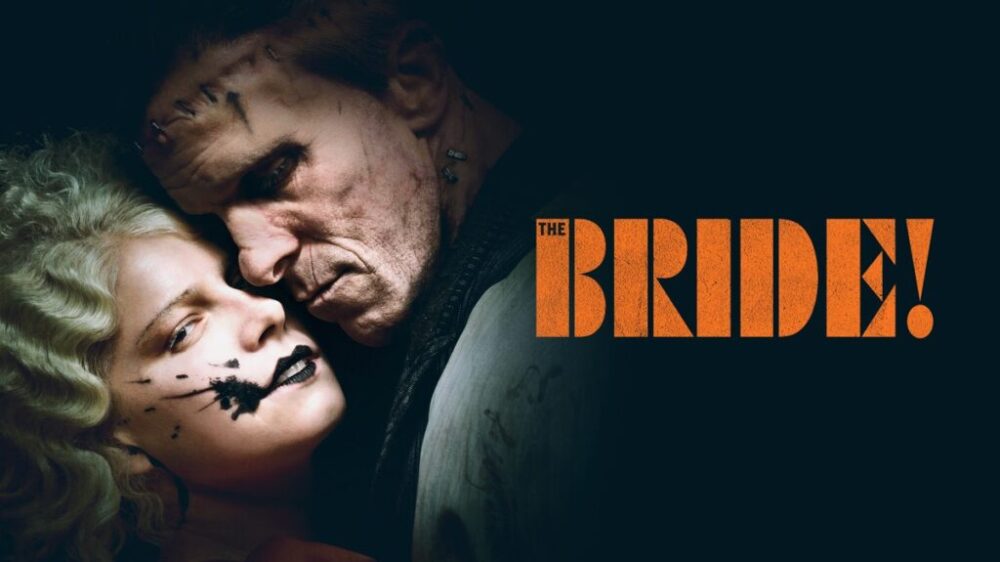
Ida, oddly unaware that she has died rather than simply sustained a bump on the head, is convinced by Frank that she was his bride at the time of the accident that robbed her memory. This lie opens the door to a broader narrative about consent and includes a few somewhat clumsy #MeToo references. The literal shock of resurrection has turned Ida’s hair white, and the crystalloid solution has caused her to vomit black bile that permanently stains her face and tongue — and strangely renders her even more alluring.
Against the doctor’s orders, the pair leave the relative safety of her home and go to the movies so that Frank can introduce Ida to the musical stylings of Ronnie Reed. The date moves to a jazz club, where, in a cheeky nod to Mel Brooks’ 1974 comedy Young Frankenstein, Putting on the Ritz plays in the background. An exuberantly dancing Ida is accosted by some thugs, which leads to a fight, which leads to another “unfortunate accidental death,” and just like that, the pair find themselves on the run.
Bale’s charm shines through Frank’s cracked exterior, making him a surprisingly engaging monster. His patchwork face is more Kintsugi than frightening — strangely attractive despite its crazy-paving flesh. It’s all in the eyes; alternatively soulful and sparkling with mischief, Bale makes it easy to understand Ida’s growing obsession.
As Ida, channelling Mary Shelley, Buckley has her work cut out for her. A mercurial, rage-fuelled hybrid, she makes the most of every second on screen, transitioning from lost soul to feminist warrior who triggers a street uprising by publicly outing Lupino as a killer of women.
Her performance is by turn manic and vulnerable and her catchphrase “ I would prefer not to” is representative of a kind polite resistance that will be depressingly familiar to women everywhere.
Drawing inspiration from the 1935 film Bride of Frankenstein, which featured Elsa Lanchester in the dual roles of Mary Shelley and The Bride, this is not an easy film to categorise. The first 15 minutes feel chaotic, and Shelley/Ida’s stream-of-consciousness dialogue lands somewhat oddly. I found myself thinking, “I really want to watch this again, only with subtitles to catch every word.”
Gyllenhaal has a lot to say, and she has assembled a formidable cast to deliver it. Peter Sarsgaard as Detective Jake Wiles, the quintessentially haunted detective, gives a solid and empathetic performance, perfectly balanced by Penélope Cruz as Myrna Malloy, his sassy and ambitious assistant. Together, they bring a sweet and sparky chemistry reminiscent of Cary Grant and Rosalind Russell in the 1940 classic His Girl Friday.
Like Frank and Ida themselves, The Bride is a jumbled fever dream of a movie. Part musical, part gothic horror, part dysfunctional love story, it occupies a space reminiscent of Sinners in its melding of music and mayhem.
There are also firm nods to Bonnie and Clyde, Wild at Heart and even the classic Dennis Potter TV series from the late seventies, Pennies From Heaven.
Ultimately, though, it is unapologetically itself. Messy, audacious, and occasionally bewildering, Maggie Gyllenhaal has crafted a film that refuses to sit comfortably in a single genre, revelling instead in the collisions between horror, romance, and spectacle. Jessie Buckley and Christian Bale bring magnetic energy to their roles, making the chaos feel purposeful rather than overwhelming. It’s not a perfect film, but it is a daring one—a cinematic patchwork that lingers in the mind, rewarding viewers who embrace its eccentricities and dark heart.
Jo Barry
The Bride is in cinemas now. Click here for tickets and showtimes
