
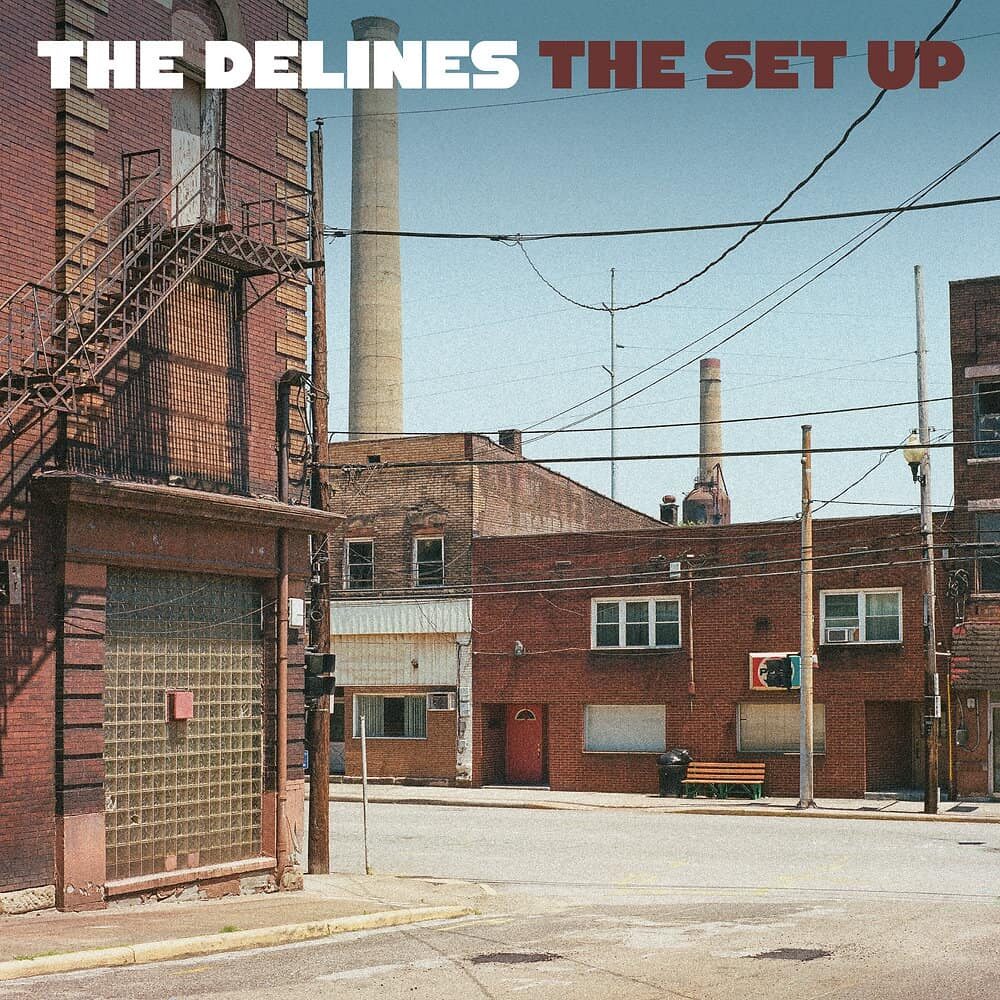
The Delines – The Set Up (El Cortez) (13th Floor Album Review)
The Delines’ The Set Up unfolds as a sequence of interlocking short stories. Soul-inflected arrangements frame the closely observed lives created by songwriter Willy Vlautin, tracing people whose paths intersect as they drift through fading towns towards uncertain futures.
Formed in Portland in 2012, The Delines bring together vocalist Amy Boone, keyboardist and trumpeter Cory Gray, bassist Freddy Trujillo, drummer Sean Oldham with Vlautin on guitar. Their sound blends elements of country, soul and cinematic Americana. Vlautin, who has published seven novels with an eighth scheduled for release later this year, writes lyrics with the attentiveness to character and circumstance of a novelist, and the band’s patient arrangements allow those stories to unfold with clarity and restraint.

The world of The Set Up connects closely with the band’s previous album Mr. Luck & Ms. Doom. Several of these songs first emerged during those sessions before being set aside, their darker tone suggesting another perspective on the same world. Across the album, Vlautin introduces lives drawn from the margins of American life. Addicts, grifters, drifters and the lives that move alongside them appear throughout the songs, inhabiting motel rooms, parked cars and temporary apartments while trying to maintain fragile routines.
The opioid epidemic, which Vlautin has cited as an influence on the record, shapes the circumstances surrounding many of these stories. Writers such as Raymond Carver and Denis Johnson explored similar territory in American fiction, drawing attention to lives shaped by economic hardship, addiction and brief moments of grace. Vlautin’s songwriting carries a novelist’s observations of people rather than the confessional voice typical of many songwriters. Small details reveal entire lives: sleeves pulled down to hide track marks, a taxi meter ticking outside, the passing mention of a record store or a parade. These fragments accumulate as a wider social world begins to emerge.
The album opens with The Set Up, Pt. 1, where sparse piano keys and the slow pulse of bass and snare establish a late-night atmosphere while brass murmurs in the background. Over this restrained setting Boone introduces Harold and Pearl, the first figures in the album’s constellation of stories. Their situation establishes a central idea running through the record: reckless gambles can appear as routes toward freedom.
From there the album moves through a series of character sketches. Can You Get Me Out Of Phoenix? unfolds over a slow guitar figure whose twanging lines open space between the verses. Boone’s voice carries a soft pleading quality while the arrangement gradually expands before settling again into a mournful guitar line as the song fades.
Instrumental passages act as transitions between these scenes. Jumping Off In Madras arrives as an unsettled instrumental built around urgent brass and shifting percussion. Snare rolls rise and fall before the piece settles beneath a searching trumpet line that suggests arrival somewhere unfamiliar.
Individual portraits build the record’s world. Dilaudid Diane begins with her name called out over echoing piano keys as the story unfolds in measured phrases. The narrator holds to a hope that others no longer share: “the guys don’t think she’ll make it back but I know inside she still has enough.”
Keep The Shades Down places Boone’s voice over piano, light snare and muted brass while the arrangement stretches gently around the verses. Each return to the line softly insisting someone to come back to bed deepens the sense of intimacy and fatigue within the scene.
Elsewhere the music reflects moments of suspension. Getting Out Of The Ward drifts forward on light piano figures and shimmering cymbals before a gentle beat gathers beneath it, holding the narrator between recovery and uncertainty, where the question becomes whether staying or leaving offers the better future.
The three Set Up pieces frame the record as a loose narrative arc that mirrors the structure of a con: lure, catch and grift. As the story circles back to Harold and Pearl, the title gathers a wider meaning. The set up becomes the web of circumstance shaping a life long before anyone recognises the rules of the game.
Several songs deepen the album’s sense of fatalism. The Reckless Life circles its story of Bonnie with droning textures while the refrain “some come back and some don’t” sits at the centre of the song. The narrative turns when the narrator’s purse is stolen, leaving the moment suspended in uneasy recognition. On Walking With His Sleeves Down Boone’s phrasing stretches across the piano lines with deliberate pauses that give each word weight, capturing the stalled existence described in the lyric.
Time itself becomes a presence in The Meter Keeps Ticking. Guitar stabs and steady drums create the sense of waiting while the repeated line “ticking and ticking and ticking and I can’t move at all” captures the paralysis and cost of inaction. The feeling lingers into the closing instrumental The Last Time I Saw Her where low drones and sparse piano notes slowly dissolve into silence, ending the record in a dark, haunted place.
Across the record, The Delines favour patient arrangements where trumpet, piano and rhythm section move in slow cycles. This spacious setting allows Boone’s voice to inhabit each role fully. Her phrasing carries a calm, reflective quality that makes the songs feel like the listener is being confided in late at night.
Taken together, The Set Up forms a vivid portrait of lives unfolding along the edges of the American story. Vlautin’s writing observes these figures with patience and compassion while The Delines surround them with music that carries warmth, restraint and quiet gravity. Narrative and atmosphere reveal how chance, circumstance and endurance shape the paths these lives follow.
John Bradbury
