
U2 – Days Of Ash (Island Records) (13th Floor EP Review)
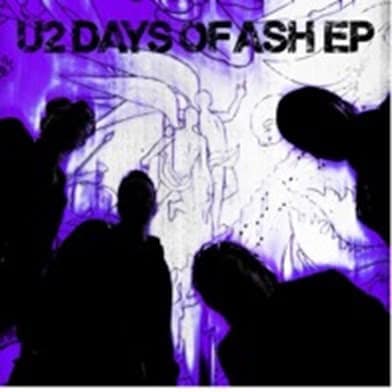
Days Of Ash, the new six-track EP from U2, arrives ahead of a forthcoming album later this year and places the band once again in conversation with contemporary political events.
The songs draw on current world turmoil and individual lives, continuing a long-standing impulse within U2’s work to respond directly to the social and political realities while allowing performance and sound to carry emotional meaning. As ever, Bono’s searching vocal presence, The Edge’s textural guitar work, Adam Clayton’s anchoring, melodic bass playing and Larry Mullen Jr.’s metronomic, precision drumming form the foundation on which these songs unfold.
Across their career U2 have stepped toward moments of history with unusual openness. With Sunday Bloody Sunday, violence was turned into urgent rhythmic confrontation, while songs such as Pride (In the Name of Love) carried historical memory into communal song, and later performances linked the band’s music with places marked by conflict and recovery. Days Of Ash follows that lineage by grounding large themes in specific people, allowing human stories to guide the emotional direction of the music.

Producer Jacknife Lee shapes the EP through careful placement of instruments and voice. Drums sit forward and tactile, bass lines move with steady physical presence, and guitars appear as chiming patterns, rhythmic strums and sustained tones that colour the emotional space. Electronic textures glimmer throughout, sometimes buzzing briefly before receding, creating atmosphere while preserving the sense of a band playing together. Bono’s vocal sits high and exposed within this landscape, carrying fragility alongside conviction.
Opening track American Obituary begins with a surge of guitar and drums that establishes immediate propulsion. Distorted tones and insistent rhythm give the performance urgency while the lyric moves from constitutional language into a tribute centred on Renée Good, anchoring political ideas and current events within a single life. The music maintains tension as it contracts to drums and vocal before expanding again. As Bono repeats “the power of the people is so much stronger than the people in power,” the phrase gathers strength through accumulation, carried by the locked pulse shared by Clayton and Mullen, echoing a long-standing U2 instinct for turning plainspoken lines into communal mantras through repetition.
The Tears of Things takes a biblical frame, strummed acoustic guitar supporting a measured, almost spoken delivery shaped by Old Testament imagery. Spiritual language has run through U2’s writing since their earliest records, functioning as an emotional vocabulary rather than doctrine, and here it returns as a way of grappling with grief and endurance. Bass notes punctuate key lines, giving the lyric weight without slowing its movement. The structure unfolds as a gathering sequence of reflections, growing more urgent as contemporary references enter the frame. The acceleration and rising intensity of The Edge’s guitar lead us toward the image of tears “rising like a flood,” before the track closes with Bono alone, intimate and unguarded.
A tonal shift arrives with Song of the Future, whose bright rhythm and danceable pulse introduce lift and forward motion. Written in honour of Iranian teenager Sarina Esmailzadeh, whose name echoes throughout, the music carries a sense of momentum that mirrors its subject’s youth. Soft choral voices deepen the emotional impact while guitar and drums propel the track forward, rhythm expressing resilience as clearly as the lyric.
Wildpeace centres Nigerian artist Adeola, whose spoken delivery brings a distinct presence to the EP. Her calm, measured cadence moves through a field of gently shifting synthesisers and electronic tones that gather and fall away as she speaks. The music surrounds rather than directs her performance, slowing the pace to allow reflection before the final songs.
One Life At A Time becomes the emotional core. Low electronic tones rumble beneath an emerging vocal before guitars and drums gradually assemble around it. The piece advances through echoing phrases and rising textures suggesting contemplation and persistence. Lines unfold with the cadence of prayer, circling ideas of listening and gradual change as instruments swell and recede around the vocal centre.
Closing track Yours Eternally, featuring Ed Sheeran and Ukrainian musician Taras Topolia, opens with chiming acoustic guitar before expanding into a fuller collective sound. Bass and drums throb steadily beneath the vocals. As guitars accelerate and percussion sharpens, the performance gathers energy toward a closing affirmation shaped through shared voices.
Across Days Of Ash, U2 focus closely on individual lives, allowing each piece space to unfold through rhythm, performance and atmosphere rather than scale. Jacknife Lee’s open production keeps the playing immediate, with bass and drums providing steady grounding while guitars and electronics colour the emotional edges. Across these six songs the band move between confrontation and reflection, using multiple voices and shifting textures to engage directly with current world turmoil. In doing so, U2 return to the conversation with the present through attention to sound and story, allowing words and music to carry meaning together.
John Bradbury
Days Of Ash is out now via Island Records. Listen HERE.
